Local detail
The Common Mistake
The usual mistake is trying to force a door back onto its track by hand, then running the opener again to see if it clears itself. On a lot of the doors we see around Prior Lake, that track is original to a house built sometime between 1964 and 2005 - a lot of it from the 1980s and 90s building boom that filled in this area. Track brackets from that era were bent and bolted to framing that has since shifted a little, which is normal, but it means the track is no longer perfectly plumb even if it looks fine at a glance. Forcing a roller back in by hand doesn't fix that misalignment, it just hides it for a cycle or two. The other common mistake is assuming a rubber mallet and a few taps solves it permanently. It can get a door moving again for the afternoon, but if the bracket is loose or the track has bowed from age, the door will jump again, usually at a worse spot and often on a day you don't have time to deal with it. Neither of these fixes the actual cause, and both can bend the track further or strain a cable that was already working harder than it should.
The area
When to Call Someone
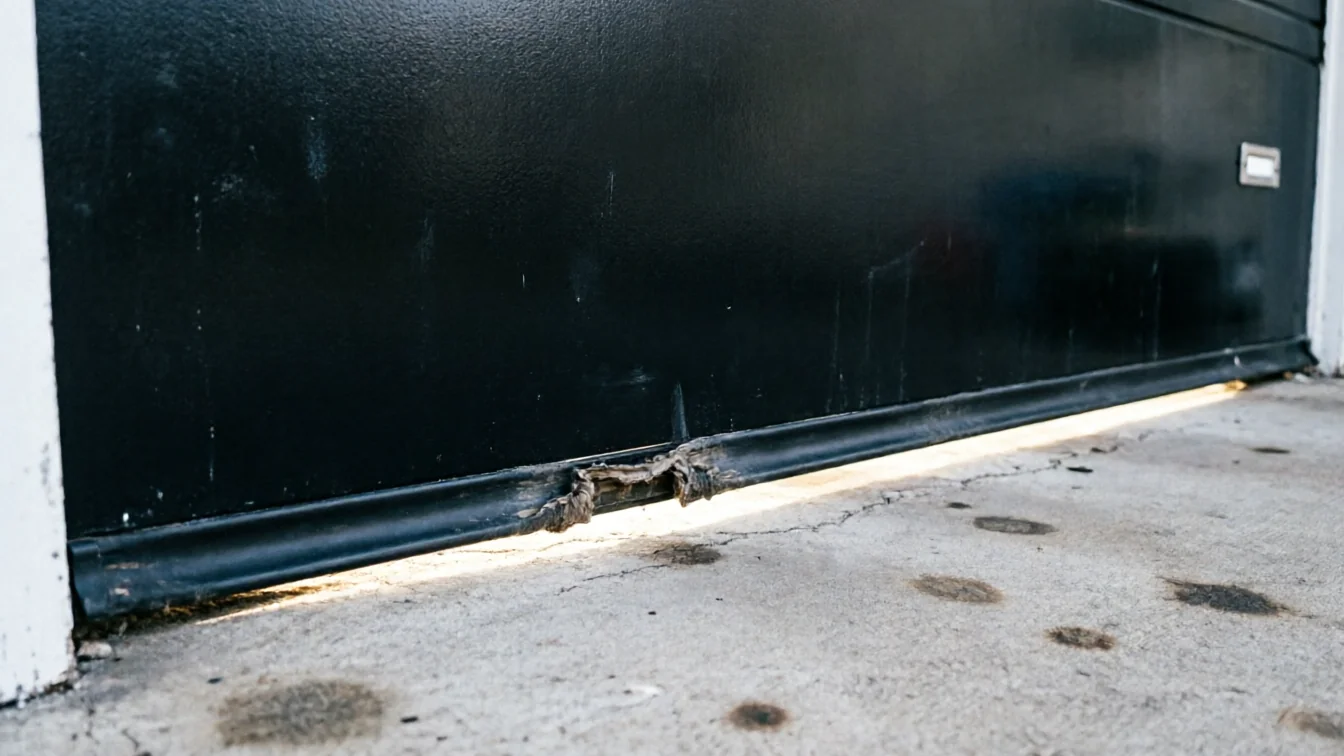
Call before you run the opener again if the door is visibly tilted in the opening, if you hear a bang or pop right before it sticks, or if one side of the door is noticeably lower than the other when it's down. Those point to a bent track, a broken cable, or a roller that's come apart - not something you want an opener motor pulling against. If the door moves roughly but stays on the track, you likely have more time, though it's still worth getting looked at before it gets worse. One honest limit: if the track itself is bent rather than just knocked loose, straightening it rarely holds for long on older hardware. At that point replacing the section of track costs less in the long run than repeated adjustment calls.
What we find
What Is Going On
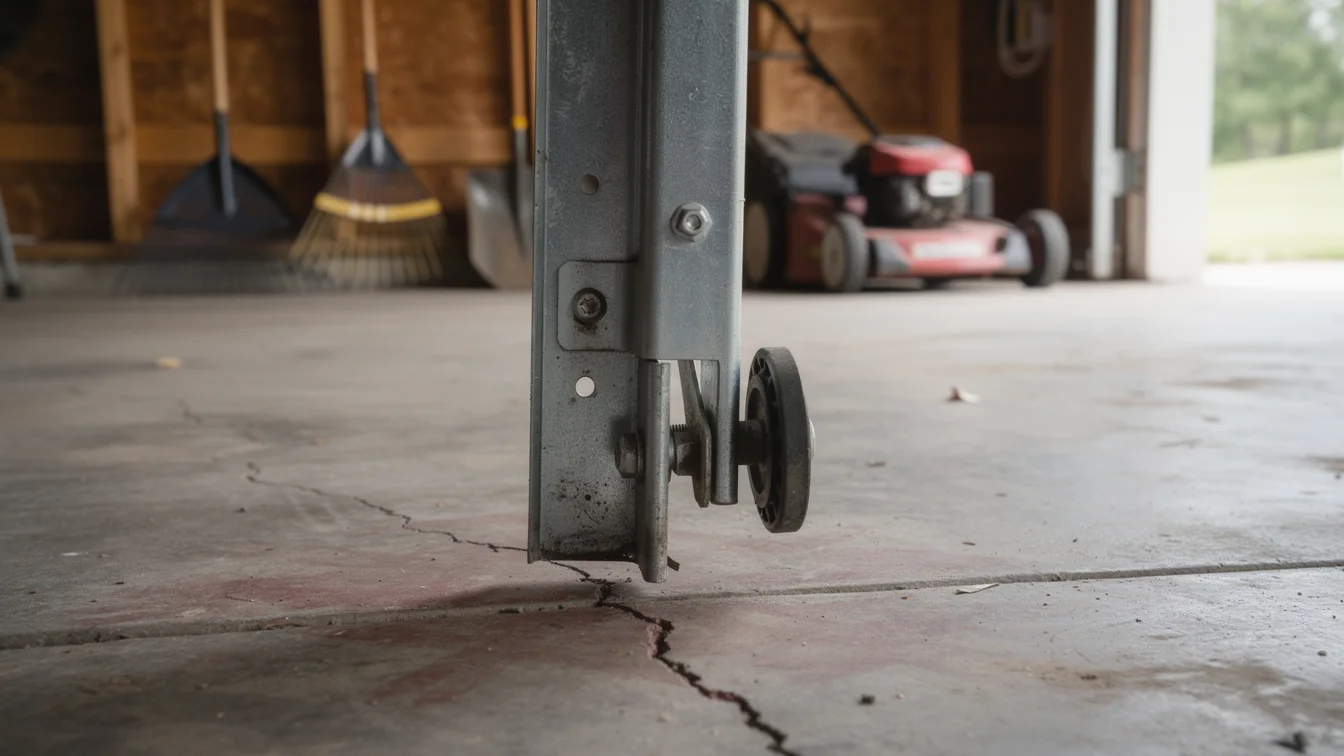
A door comes off track when something changes the geometry it depends on - a loose roller bracket, a cable that's stretched or frayed unevenly, or a track that's been bumped out of alignment by a car bumper or years of settling. With housing in this area built mostly from 1964 through 2005, and a concentration from the 1980s and 90s across the 27 named areas that make up Prior Lake, a lot of track hardware is 25 to 45 years old. Galvanized track from that period wasn't built to the tolerances manufacturers use now, and the lag bolts holding brackets to jamb studs loosen slightly every heating season as wood framing dries and shrinks. None of that is a defect, it's just what happens to a mechanical system installed decades ago that hasn't had the brackets re-torqued since. Add a worn roller - plastic rollers especially - and the door has just enough play to walk off the rail under normal use.
How we work
How Local Conditions Play In
Prior Lake sits in a severe cold climate band, and that matters more for track alignment than most homeowners expect. Steel track contracts in deep cold, and the wood framing around the opening contracts and swells with humidity swings through the heating season. On a house from the 1980s or 90s, decades of that seasonal movement work lag bolts loose a fraction of a turn at a time. A track that was square in July can be off by enough in January for a roller to catch the edge instead of rolling through it, especially on the first cold snap of the season when everything is stiff. We see this pattern often enough on original hardware in this area that a late-fall bracket check is worth more than most other maintenance you could do to the door.
Talk to a local pro
Garage door trouble in Prior Lake?
Same-day service with honest, upfront quotes.