Local detail
The Common Mistake
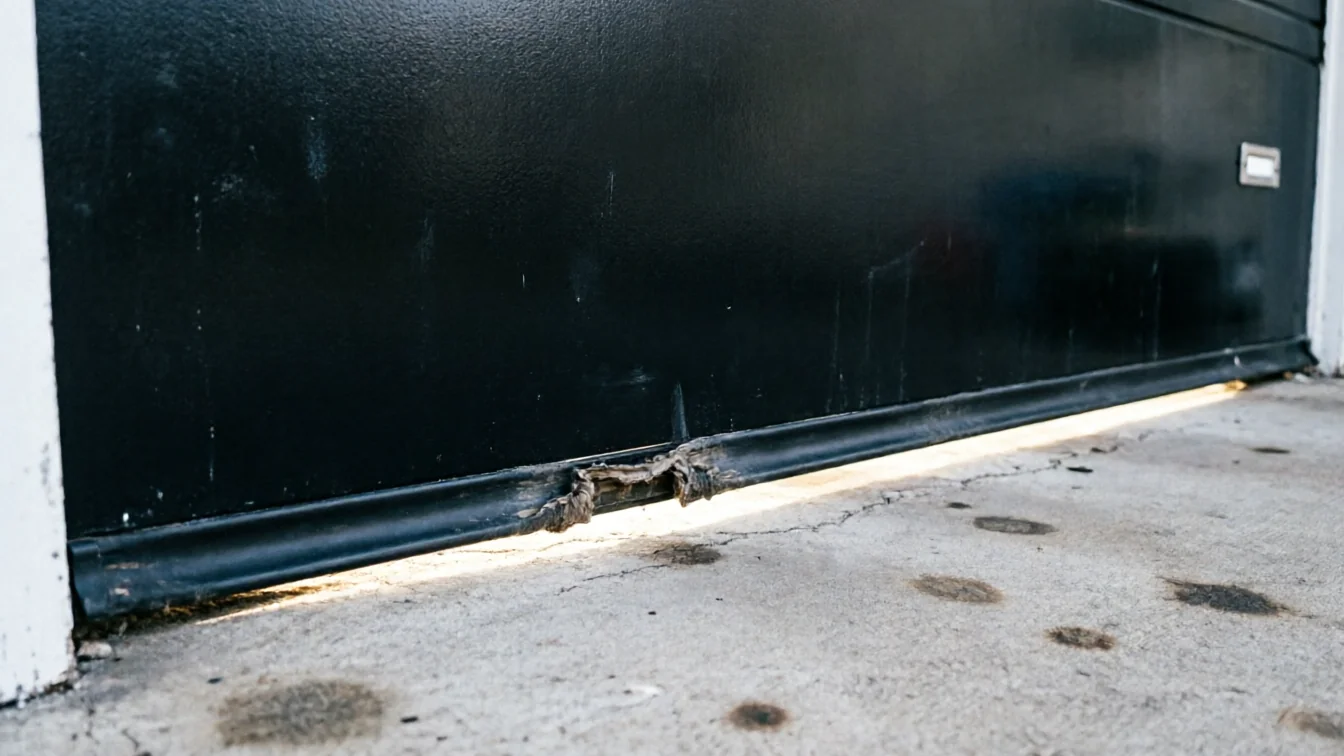
The usual move is to buy a roll of bottom seal at the hardware store, staple it on, and call it done. That fixes a gap at the floor for a season, maybe two, but it misses the bigger picture on a lot of Prior Lake houses. Most of the garage doors around here sit on homes built between 1964 and 2005, with the median build year landing in 1989 - meaning a huge share of the doors you're looking at are first- or second-generation units from that 1980s-90s construction wave. The weatherstrip compounds used on those original installs are nowhere near as flexible as what's sold today, and they've had three or four decades of freeze-thaw cycles to harden and crack. Slapping a new bottom seal on a door that still has brittle side seals and a shrunk astragal just moves the draught up six inches. You feel less air at your ankles and still get a cold wall of air off the door face. The seal is only as good as the piece of hardware it's sealing against, and on a house from that era, the track alignment and panel seams have usually drifted enough that a stock seal won't sit flush without some adjustment first.
The area
When to Call Someone
Call if you can see daylight along the top corners of the door when it's shut, or if frost builds up on the inside face of the panels overnight - that's condensation finding a cold bridge, and in a severe cold climate like this one it means the seal has stopped doing its job well before spring. Call if a draught shows up at a specific spot every time, rather than along the whole bottom edge; that's usually a warped panel or a bent track pulling the door off the seal, not something a new strip of rubber solves. Call if the garage shares a wall with living space and you've started noticing a cold patch on that wall in January - in a climate this cold, a door that's sealing poorly can pull the temperature of an attached room down several degrees over a winter. One honest note: if the door itself is more than a couple decades old and the seal problem is really a warped panel or sagging track, replacing the seal is a band-aid. At that point you're better off pricing a new door than chasing draughts on an old one every winter.
What we find
What Is Going On
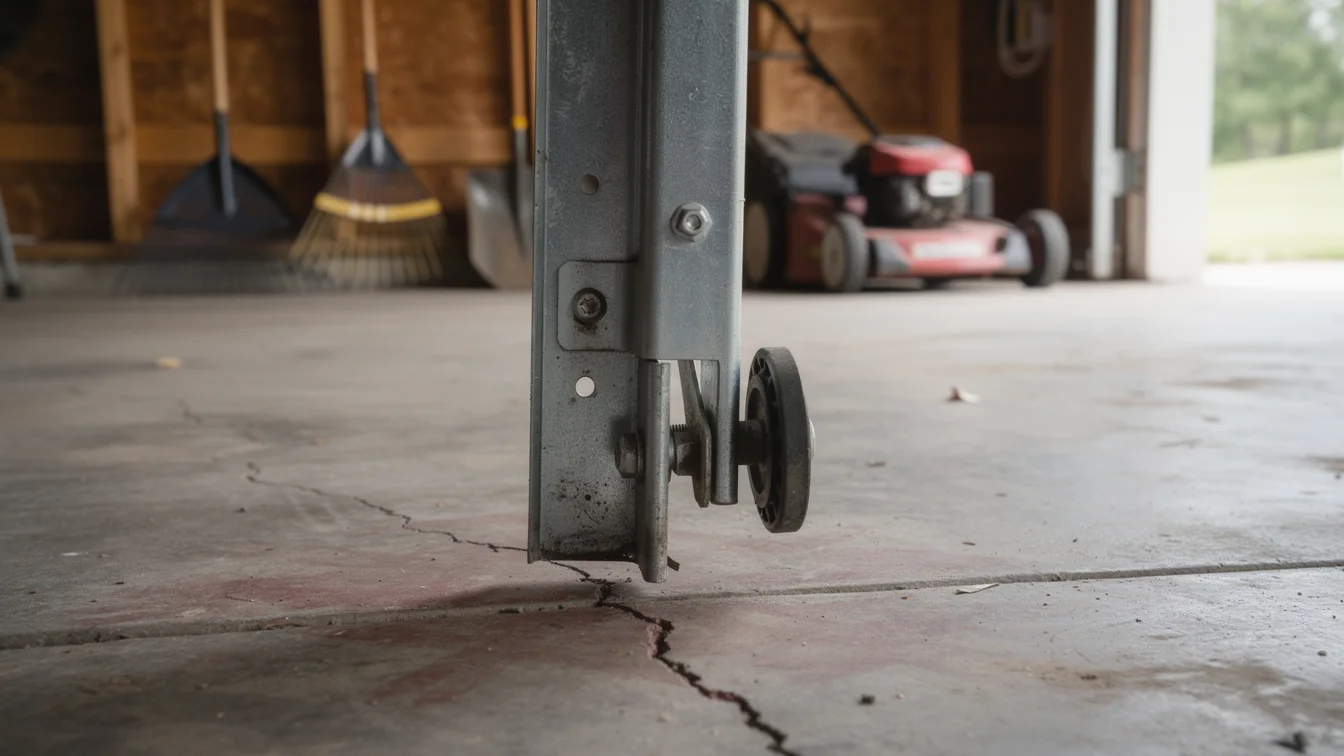
The physics are simple even if the fix isn't. A severe cold climate means big swings between the garage interior and the outside air, and vinyl and rubber seals shrink as they cool. On a door installed during that 1964-2005 building wave - most of it clustered in the 80s and 90s per the local housing stock - the seal material has already lost most of its elasticity from age alone before the cold even factors in. Add decades of garage door use, where the seal gets compressed and released thousands of times, and the rubber develops a permanent set. It stops springing back to fill the gap once the door's closed. That's why older seals look fine sitting still but let obvious light and air through the moment there's wind pressure against the door. On houses from this era, the threshold itself has often settled a little too, since the slab and the door track were set up together decades ago and concrete doesn't stay perfectly level forever. So you're dealing with two things at once: an aged seal that's lost its memory, and a sill or track that's moved slightly out of the plane the seal was built to meet.
How we work
How Local Conditions Play In
Prior Lake and the towns around it - Jordan, Credit River, Elko New Market, all within about a dozen miles - sit in the same severe cold band, so the seal problem here isn't a one-house issue, it's a housing-stock issue. With 45,366 owner-occupied houses among the 70,634 households in this service area, a large chunk of them built in that same 1964-2005 window, a lot of neighbors are fighting the identical draught at roughly the identical age of door. The median household income in the area, $125,344, means most owners here treat a worn seal and threshold kit as a repair to schedule, not something to put off for years - which is the right call, because every winter the gap sits open is a winter of extra heat loss through that one wall. The climate doesn't give you a mild stretch to procrastinate through; severe cold means the seal is working hard from November through March, and a door that's marginal in October is usually failing outright by January.
Talk to a local pro
Garage door trouble in Prior Lake?
Same-day service with honest, upfront quotes.