Local detail
The Common Mistake
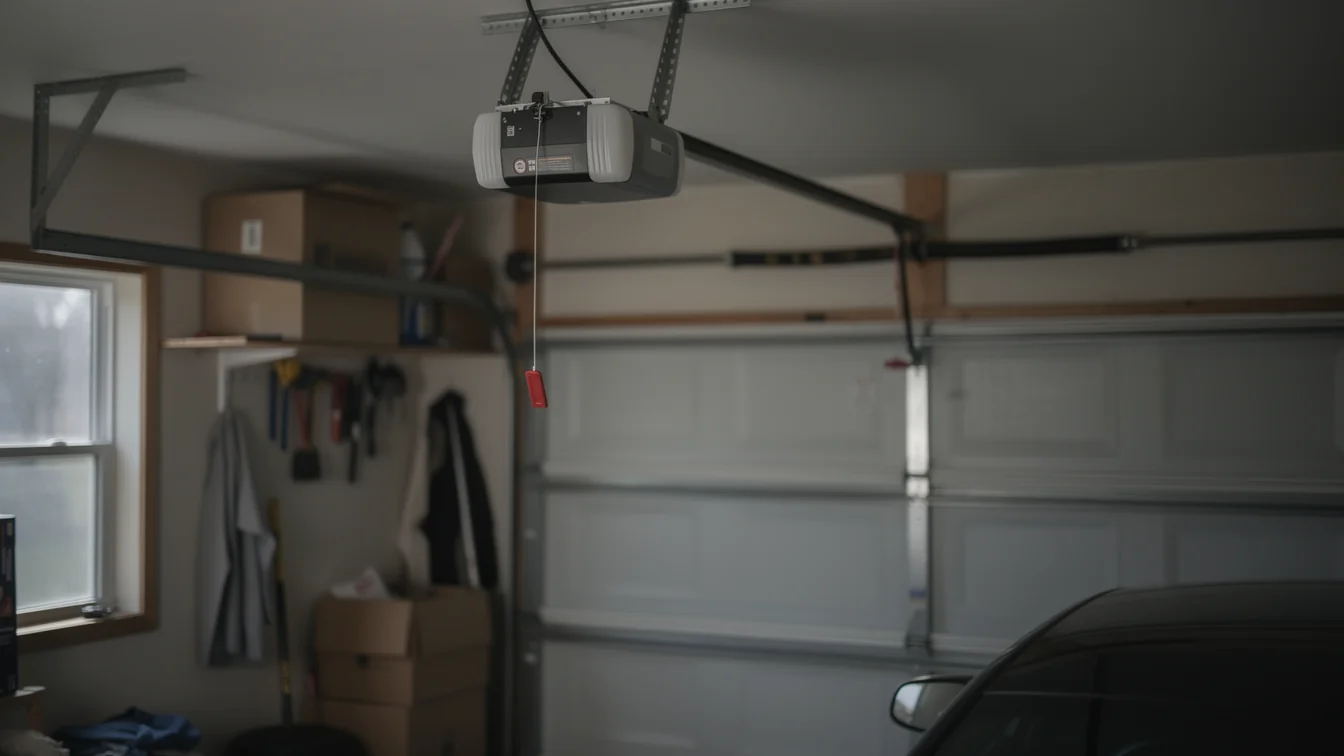
The mistake we see most in Prior Lake is a homeowner who waits until a storm knocks the power out to go looking for the manual release cord. By then it's dark, it's cold, and the door is stuck in whatever position it happened to be in when the lights died. Most of the opener units still running in this area date to the 1980s and 90s build wave that put up a huge share of the local housing stock, and a lot of those units were installed before battery backup was standard equipment. That means a power cut doesn't just stop the opener - it locks the door exactly where it sat, with no backup kicking in to finish the cycle. The fix isn't complicated: know where your release cord is before you need it, and test it once a year, not during the outage. The second mistake compounds the first - people yank the release cord without supporting the door, and a heavy older panel comes down fast on a cable or a hand. Release the cord, then lower the door by hand slowly. If it won't move smoothly on its own, that's a spring problem, not a power problem, and pulling harder doesn't fix it.
The area
When to Call Someone
Call if the opener runs but the door won't move - that's usually a disconnected or worn trolley, not the power supply, and it's a quick fix. Call if the door drops fast or feels heavy the second you pull the manual release, because that points to a spring that's already lost tension and a slow hand-lower turns into an uncontrolled drop. Call if your opener is original to a house built in the 1964-2005 window this area was mostly built in and you've never had the circuit board checked - boards that age fail from cold-weather condensation cycling more than from simple age, and they rarely give warning before they quit outright. We don't recommend replacing a working opener just because it's old; if the motor runs quiet and the travel is smooth, there's no reason to swap it out ahead of schedule. But if you're resetting the travel limits every few weeks or the unit hums without moving the door, that's past the point where a reset helps.
What we find
What Is Going On
An opener failing during a power cut is almost never about the opener itself - it's about what the cold does to everything attached to it. In a severe cold climate like this one, metal contracts, lubricant stiffens, and the extra load that puts on a motor already working against a heavy door is what trips a breaker or burns out a capacitor right when the grid is already stressed by the same cold front. Homes built across the 1964-2005 stretch that makes up most of Prior Lake's housing carry a wide range of opener generations, and the older half of that range - especially anything installed before the late 1990s - wasn't built with battery backup in mind at all. When the power comes back, those units sometimes need a manual reset of the travel limits because the circuit lost its memory of where the door sits. That's normal, not a sign of a bigger failure, though it's worth checking the travel distance is right before you trust the auto-close feature again.
How we work
How Local Conditions Play In
Prior Lake sits in a severe cold climate band, and that matters for openers in a specific way: cold doesn't just slow a motor down, it changes how the safety sensors behave. Photo-eye sensors mounted low on the track can drift out of alignment when a slab shifts slightly with frost, and in a power-cut-then-restore cycle, a misaligned sensor is often what stops the door from closing even after the opener itself is fine. Across the service area's roughly 45,000 owner-occupied houses, most sitting in that 1964-2005 build range, this is one of the most common no-close complaints we get after a cold snap knocks the power out and back on. It's worth a two-minute check after any outage: wipe both sensor lenses, confirm they're still pointed at each other, and only then assume a real fault if the door still won't close.
Talk to a local pro
Garage door trouble in Prior Lake?
Same-day service with honest, upfront quotes.