Local detail
The Common Mistake
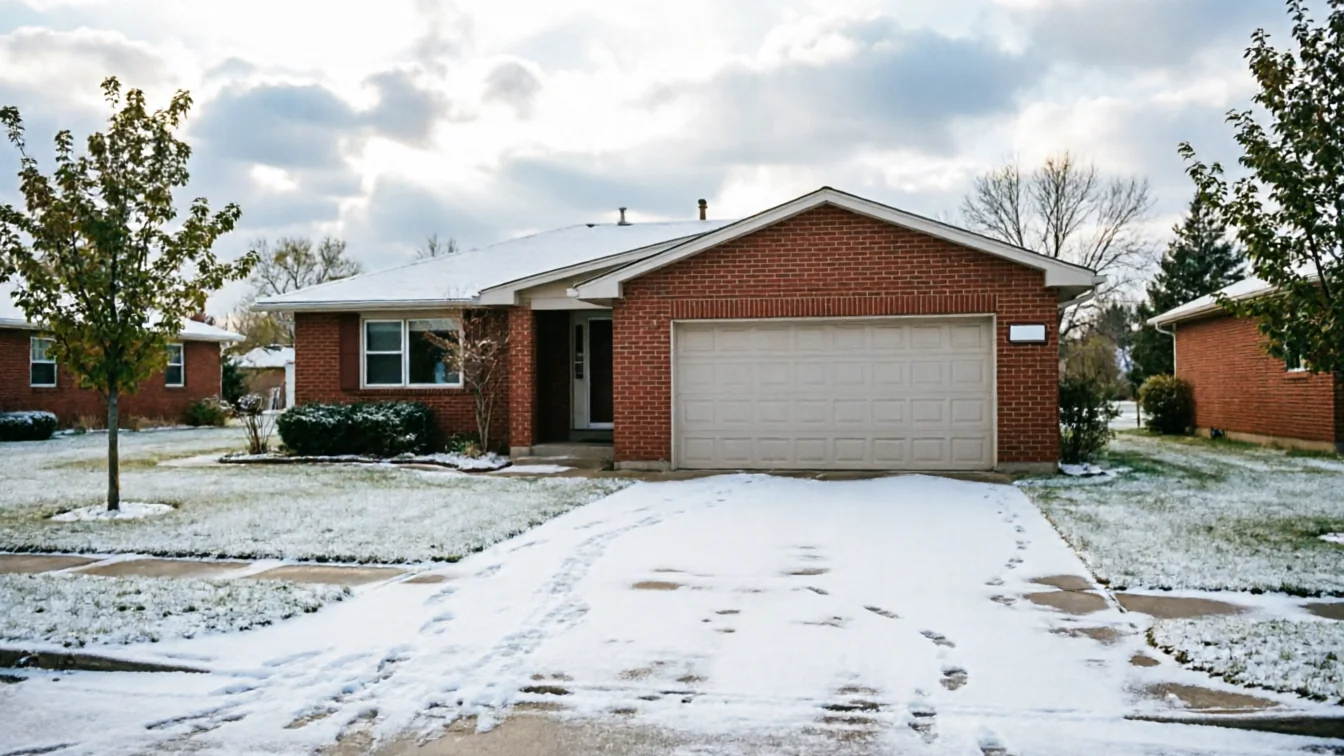
The mistake we see most is treating every squeak the same way - a shot of WD-40 and moving on. That works for a hinge on a 2015 build. It doesn't work the same way on a lot of the doors around here. Most houses here went up between 1964 and 2005, with a median build year of 1989, which means the springs and openers in a lot of these garages are nearing or past the end of their rated cycle life. A torsion spring is good for somewhere around 10,000 cycles. A door opened twice a day for 30 years has used most of that up, whether or not it's ever made a sound.
Across the 27 named areas we cover, the stock is mostly 1980s and 90s construction - doors and openers from the same two decades, failing at the same time. That's not a coincidence, it's a maintenance wave. Spraying lubricant on a spring that's three-quarters through its life doesn't buy you much time, and it can mask the one noise that actually matters: a spring starting to unwind unevenly before it lets go.
The area
When to Call Someone
Some sounds are routine. A door that groans once when it's cold and then runs quiet isn't an emergency. Call someone when the noise changes character - a single loud bang (that's usually the spring going), a rhythmic thunk that gets louder with each cycle (a roller giving out, or a bent track section), or a grinding that wasn't there last week.
A grinding sound on a door built before the mid-1990s is often the nylon roller itself, not the track - this is era-specific hardware, not generic wear. Those rollers were never rated for the decades of use a lot of these doors have now put on them, and once the nylon cracks, it chews the track edge too, which turns a cheap roller swap into a track replacement if you wait.
One honest limit: if the opener itself is original to a 1960s or 70s build, we often can't get parts for it. At that point we'll tell you straight that replacement is the better call rather than chasing a repair on hardware nobody stocks anymore.
What we find
What Is Going On
A garage door is a balance of spring tension against the weight of the panels, riding on rollers inside a steel track, lifted by a motor pulling a chain or belt. Every one of those parts wears differently depending on cycles, temperature, and the age of the system - and in Prior Lake, we're mostly dealing with systems from one fairly narrow build window.
If your garage sits on a slab poured any time from 1964 through the early 2000s, the opener's chain tension loosens more in severe cold, and that's the clack you're hearing when the door starts moving. It's not damage by itself, but it's a sign the chain needs adjusting before the slack starts putting extra shock load on the sprocket and the opener's gearing.
Cables and hinges tell a similar story. Galvanized cable on a 1980s-era door has had three or four decades of flex cycles. When a cable frays, you'll hear a faint ticking sound before it ever snaps - that tick is the strands separating, one at a time, under the spring's tension.
How we work
How Local Conditions Play In
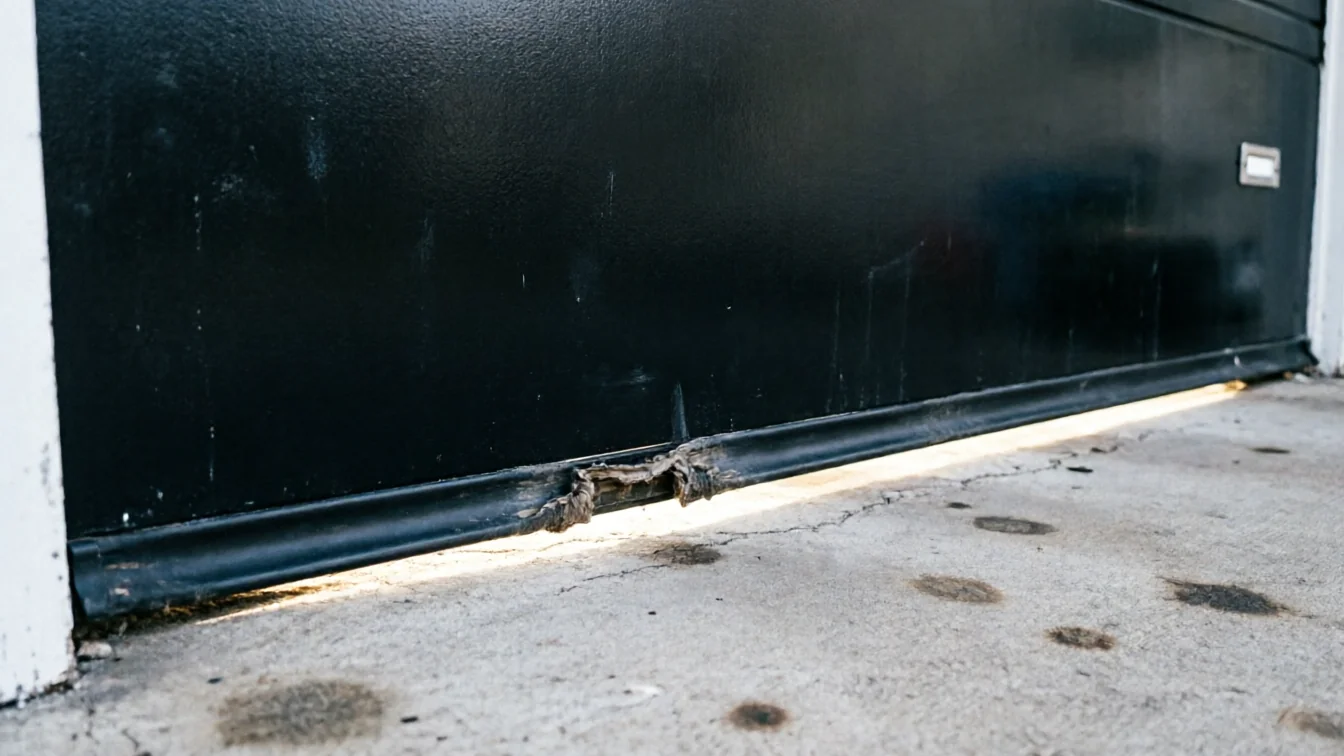
Minnesota's cold band is severe, and steel contracts enough in January that a worn roller or a dry bearing makes a noise it never made in July. Grease that was fine at 70 degrees turns stiff at 10 below, and a track that was a sixteenth of an inch out of alignment in summer binds hard enough to bang in winter.
This matters more on older systems because the tolerances were never tight to begin with - a 1980s track and a 2020s track aren't built to the same spec. Cold doesn't create a new problem so much as it finds the existing one and makes it loud enough to notice.
We work from Prior Lake out to the towns we serve nearby - Jackson and Credit River five miles off, Carver at ten, Chanhassen and Jordan around eleven - and the pattern holds across most of that stretch, since the housing ages together. If your door's been quiet all summer and starts talking to you the first cold week, that's not bad luck. That's the slack, the grease, and the tolerance all showing up at once.
Talk to a local pro
Garage door trouble in Prior Lake?
Same-day service with honest, upfront quotes.